
Russia Cargo and Freight Transport
The Russia cargo route is a strong solution area for companies seeking fast delivery, accurate documentation and a secure route plan within the trade flow between Türkiye and Russia. Air freight delivers a clear time advantage for urgent samples, spare parts, textiles, medical products, documents and high-value loads. During planning, the shipment's weight, volume, product content, customs status, destination city and delivery urgency are evaluated together.
Tetalog Logistics builds an orderly operational structure on this route, progressing through a single file, with air, road, part-load, full-load and multimodal solutions. For businesses wanting express delivery, preparation speed, the flight schedule and the recipient's document support are the main determinants of transport. A well-prepared shipment reduces lost time and gives the recipient a more predictable delivery process.
How to Ship Cargo to Russia?
The process begins with collecting product information accurately. The commodity type, HS code, commercial invoice, packing list, box dimensions, gross weight, delivery address and recipient company details are recorded in the file. The transport mode is then determined by the urgency of the goods: air freight comes to the forefront for time-critical loads, while road or part-load options step in for shipments with flexible timing. Packaging durability, label information and document consistency are the three fundamental factors that reduce the risk of delays at this stage.
Tetalog Logistics tracks the load details from departure to final delivery, giving the company a more controlled shipping experience.
Our Russia Freight Services
Russia freight is not limited to a single transport model. Road, air, sea, part-load transport, full truckload, project cargo and multimodal plans each come into play according to different needs. On this route, a wide variety of loads can be carried, such as textiles, machinery, automotive sub-industry parts, food, medical products, chemical products and trade-fair materials.
For urgent files, air freight is the most practical option, while road transport may be more suitable for bulky shipments with flexible dates. When selecting a route, product value, destination, customs requirements and delivery commitment are considered together. The right service model makes it easier to strike a balanced decision between cost and time.
Russia Part-Load (LCL) Transport
The part-load model opens up a more economical route for loads that do not fill a vehicle on their own. Samples, small boxes, palletized products, spare parts and low-volume commercial loads can be carried on the same line with a suitable plan. When choosing this model, it is important to correctly declare the load's dimensions, packaging durability and destination city; because different loads move within a shared vehicle or shared operation, labeling and the packing list must be clear. For companies that export regularly but do not need a full vehicle for every shipment, part-load transport is a practical option.
Russia Air Freight and Shipping Prices
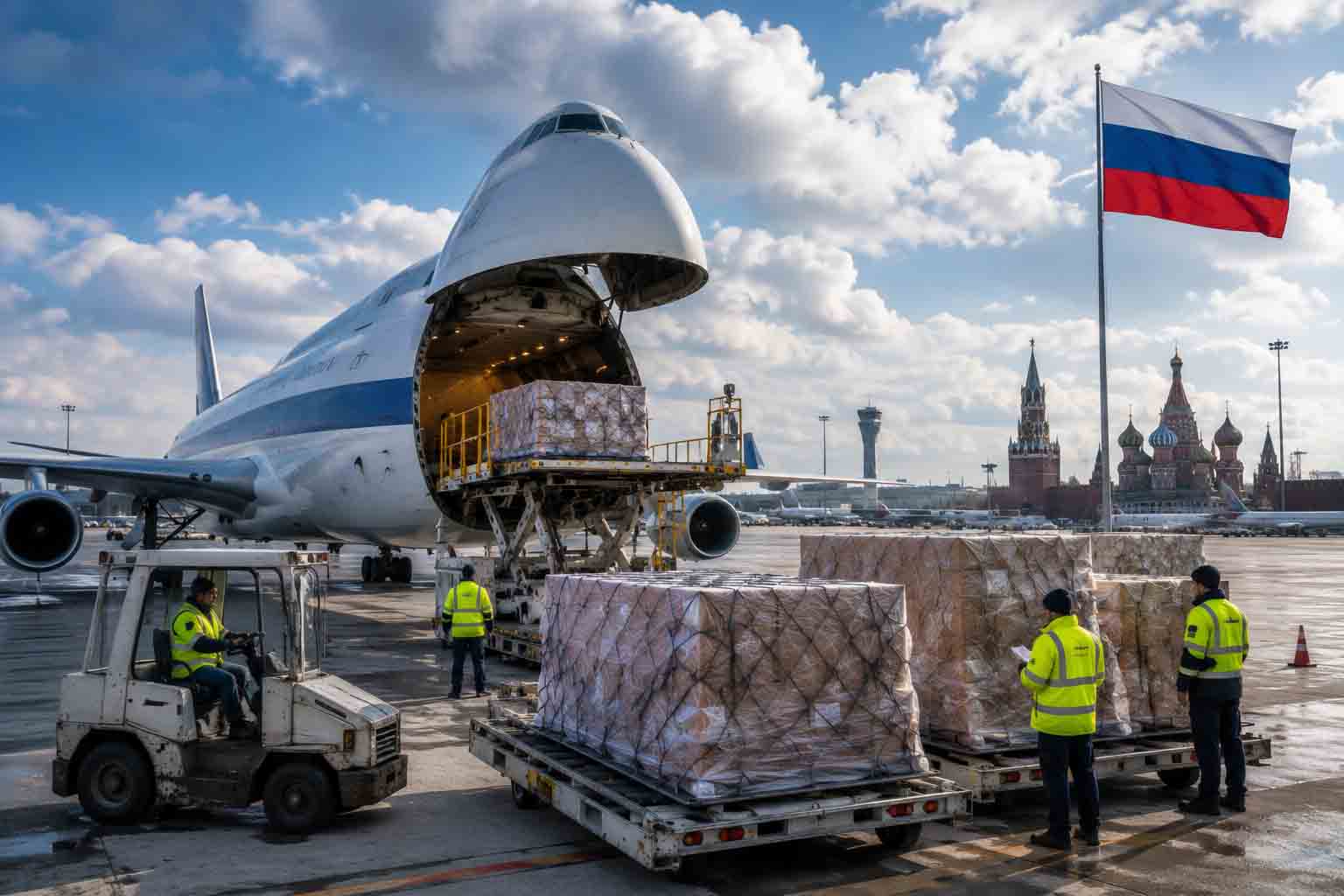
Prices are calculated based on weight, volume, city of departure, destination, product type, transport mode and delivery method. The most accurate quote is obtained when product dimensions and document details are shared. In air freight, actual weight is compared with volumetric weight and the higher one is taken as the basis; for this reason, in bulky but lightweight boxes the charge derives not from the weight but from the space occupied. Volumetric weight is usually found with the formula (width × length × height) / 5000.
Items such as insurance, inland transport, customs support and destination delivery are also included in the quote. To clarify Türkiye-Russia shipping prices, sharing an image of the load, the number of boxes and the delivery address significantly speeds up pricing.
Russia Air Freight Delivery Times
Delivery time varies depending on the readiness of the load, the flight schedule, document control, the customs process and distribution in the destination city. On the Istanbul-Moscow route, express files can be planned faster. If the destination city is outside Moscow, inland distribution time is added. Before shipping, official holidays, peak periods, the recipient's warehouse acceptance hours and the possibility of product inspection must be taken into account. When packaging and documents are ready the same day, the departure of urgent shipments is easily organized. For files with high time sensitivity, air freight offers a faster solution than road transport.
Products Prohibited and Restricted for Shipment to Russia
Checking prohibited and restricted products is one of the most sensitive steps in shipping to Russia. Weapons, explosives, certain chemicals, radioactive products, contents within the scope of dangerous goods, dual-use products, and certain technology products subject to sanctions or import restrictions may require extra checks. For food, cosmetics, medical products and electronic parts, a permit, certificate, technical conformity or recipient registration requirement may arise.
Even if a product is not entirely prohibited, it may fall into the restricted class. Therefore, before departure, the HS code, product description, brand, intended use and technical content must be written clearly. A false declaration increases both the risk of delay and return; for sensitive products, a regulatory check must always be carried out before shipment.
Russia Customs Procedures and Required Documents
For customs clearance, the commercial invoice, packing list, transport document, HS code, recipient information, product description and any required permits are prepared. Air freight files use an airway bill, while road files use a CMR and related transport documents. During the process, there should be no discrepancy in quantity, weight or product definition between the invoice and the packing list. Writing the product value correctly, providing complete recipient company details and giving clear origin information all ease the flow. For technical products, the intended use and description can be prepared in more detail; missing documents, however, cause waiting at customs and extra costs.
Why Choose Tetalog for Russia Cargo?
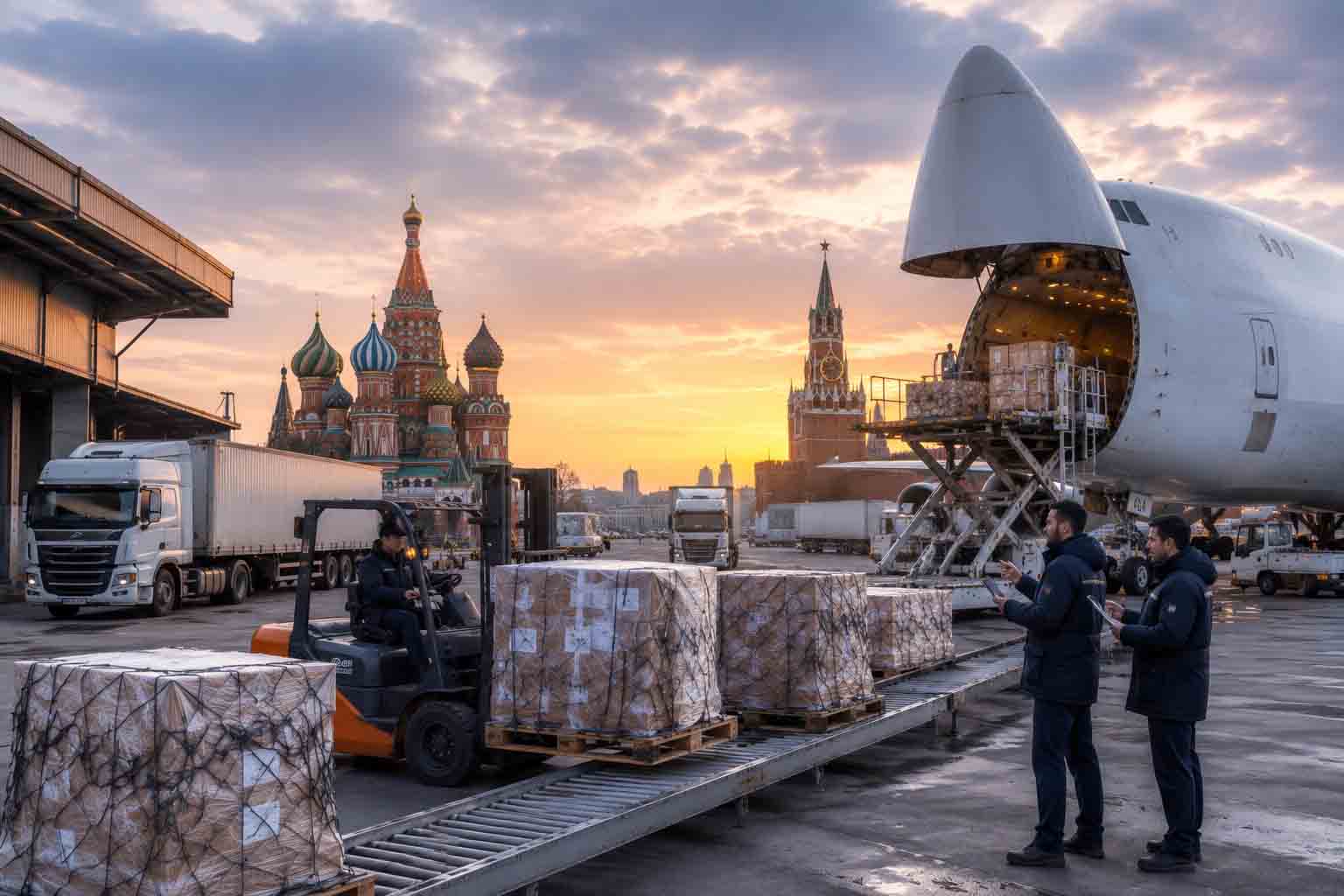
In carrier selection, operational discipline, document tracking, route knowledge and communication speed are as decisive as price. Tetalog Logistics recommends air, road, part-load, full-load and project-based plans. A strong partner does not merely transport the shipment; it also manages documentation, tracking, destination delivery and potential risks in advance. Throughout the process, the load type is analyzed, the appropriate transport mode is selected, and the company is kept regularly informed. Working with a single point of contact during peak season reduces operational confusion; planned tracking, in turn, brings confidence to sales and supply chain management.
FAQ SECTION
How is Russia cargo tracked?
Tracking runs via the operation reference, the transport document or the air freight shipment number. The departure acceptance, loading, transit, arrival, customs and delivery stages can be shared with the sender. For the best result, the shipment number, recipient name and load content should be kept in a single file. If customs inspection at arrival takes longer, the tracking information is updated together with the delivery time. For commercial loads, tracking is not just location data but a control area showing whether the operation is progressing smoothly.
Which cargo companies ship to Russia?
On the Russia route, international carriers, forwarder companies and regional logistics teams provide service. Tetalog Logistics works on this line with various solutions such as weekly part-load departures, full-load transport, air freight, sea freight, cold chain, dangerous goods and project transport. A separate operation plan is prepared according to load type for export loads, spare parts, textiles, machinery equipment, samples, factory projects and construction materials. When choosing a company, in addition to price, route experience, documentation knowledge and tracking infrastructure should be taken into account.
What products are prohibited for shipment to Russia?
Prohibited products may vary according to periodic regulations, product group and HS code. Special rules may apply in areas such as dangerous goods, weapon-like products, certain chemical contents, dual-use parts, lithium batteries, medicine, medical products, food and cosmetics. Not every product is entirely prohibited; some require a permit, conformity certificate, MSDS, technical file or recipient registration. For unclear products, requesting a document check before the quote is the safest approach.
Is it possible to insure cargo shipped to Russia?
Yes. Tetalog Logistics evaluates the insurance option based on the load's value, product type, transport model and delivery risk. CMR insurance for road transport, and different coverage plans based on load value for air and other models, may come into play. Insurance is preferred more often for spare parts, machinery equipment, trade-fair products, electronics, samples and fragile commercial loads. For insurance, the invoice value must be written correctly, packaging must be sturdy, and product images should be kept.
Do you ship cargo from Russia to Türkiye?
Yes. For loads departing from Russia, different transport models are prepared for commercial returns, sample returns, trade-fair equipment, spare parts, purchased goods, palletized loads and project-based shipments. The process begins with local pickup organization; then the commercial invoice, packing list, transport document, product description and any required permits are checked. Russia departure procedures, route selection, transport tracking and the delivery plan at the Türkiye entry are managed in a single operation file. For urgent loads, air freight offers a faster solution, while for bulky commercial shipments, road or part-load transport may be more cost-effective.
How are Türkiye-Russia shipping prices determined?
The price is calculated based on weight, volume, city of departure, destination, product type, transport mode and delivery method. In air freight, actual weight is compared with volumetric weight and the higher one is taken as the basis. Insurance, inland transport, customs support and destination delivery are also reflected in the quote. For a clear price, sharing an image of the load, the number of boxes and the delivery address speeds up the process.