

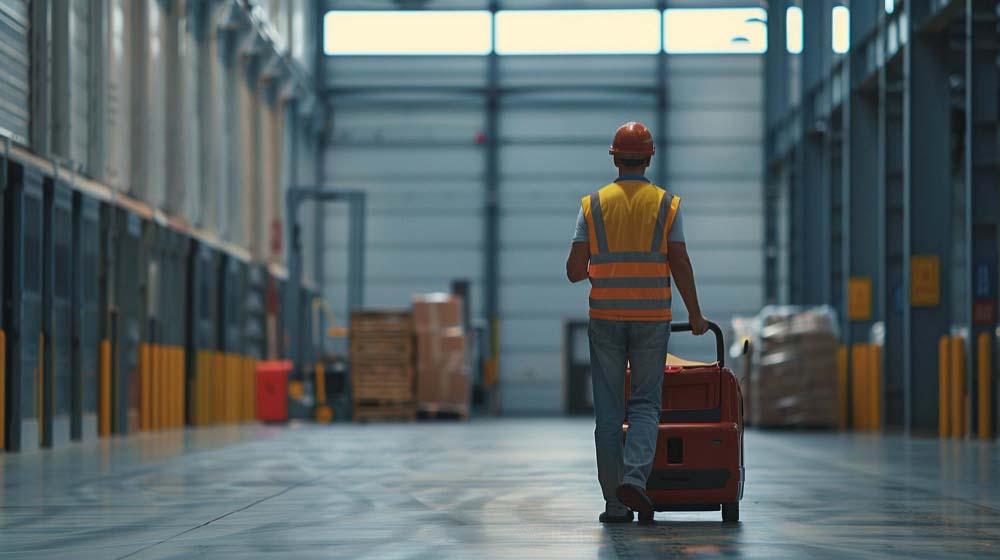
The clearest answer to the question "what is material handling?" is that it encompasses all of the unloading, loading, moving, sorting, stacking, picking, and transferring operations carried out when cargo is repositioned in a warehouse, vehicle, terminal, or production area. Its English equivalent is used as "handling." When looking at what handling means, it refers to the safe and orderly movement of goods from one point to another. In official occupational health and safety sources, manual handling covers movements such as carrying, lifting, pushing, and pulling by hand. In the broader language of logistics, however, the process includes both manual operations and equipment-assisted activities.
Why Is Material Handling Performed?
Material handling is performed to regulate cargo flow, reduce the risk of damage, speed up order preparation, and maintain workplace safety. A product arriving at a warehouse does not go directly to its final destination. Most cargo passes through steps such as receiving, inspection, sorting, temporary storage, shipment preparation, and loading — and this is precisely where the handling process comes into play. When not performed correctly, back, shoulder, and spinal strain can increase, equipment traffic can become congested, aisles can become hazardous, and product loss can occur. Official guidelines list keeping aisles clear, maintaining safe clearances for equipment, and planning material movement in advance as fundamental requirements.
What Is Handling in Logistics?
In logistics, the handling process covers the physical control of goods at transition points within the supply chain. Steps such as goods receipt, palletizing, cross-docking, shelf placement, order picking, packaging, and vehicle loading all fall within the scope of handling. The goal is to transfer cargo to the correct point, in the correct sequence, and safely — without unnecessary excess contact. When the question "what does handling mean?" is considered from a logistics perspective, it can be understood as the physical bridge between storage and transport. For this reason, a well-planned handling system holds value not only in terms of speed, but also accuracy and safety.
Types of Material Handling
Types of material handling are distinguished by the scale of the operation, the weight of the cargo, and the level of equipment available in the facility. The most fundamental distinction is between manual handling and mechanical or industrial handling. On the manual side, human effort is more dominant. On the mechanical side, forklifts, cranes, pallet trucks, conveyors, and similar equipment come into play. Regardless of which type is selected, the task, load, working environment, and personnel capacity are all evaluated together. In formal risk assessment approaches, the task, load, environment, and individual capability are considered collectively. In heavy, high-volume operations, equipment use saves time — but the wrong choice of equipment introduces separate risks. In smaller businesses, manual handling is still common, though the risk of back and musculoskeletal injuries is higher. In large-volume facilities, mechanical handling eases workflow, but if aisle organization and training are lacking, the risks of collision, entrapment, and tipping increase.
- Manual handling carries out operations such as lifting, lowering, carrying, pushing, and pulling using human effort.
- Manual methods are more common in small-volume businesses; although costs appear low, the risk of injury is higher.
- Mechanical handling is performed using forklifts, conveyors, cranes, pallet trucks, and similar equipment.
- For heavy and high-volume loads, mechanical methods make workflow more organized.
- In a mixed model, human effort and equipment are used together — this is commonly seen in warehouse and terminal operations.
- In automation-assisted handling setups, conveyors, sensors, and software flows become more prominent.
How Is Material Handling Performed?
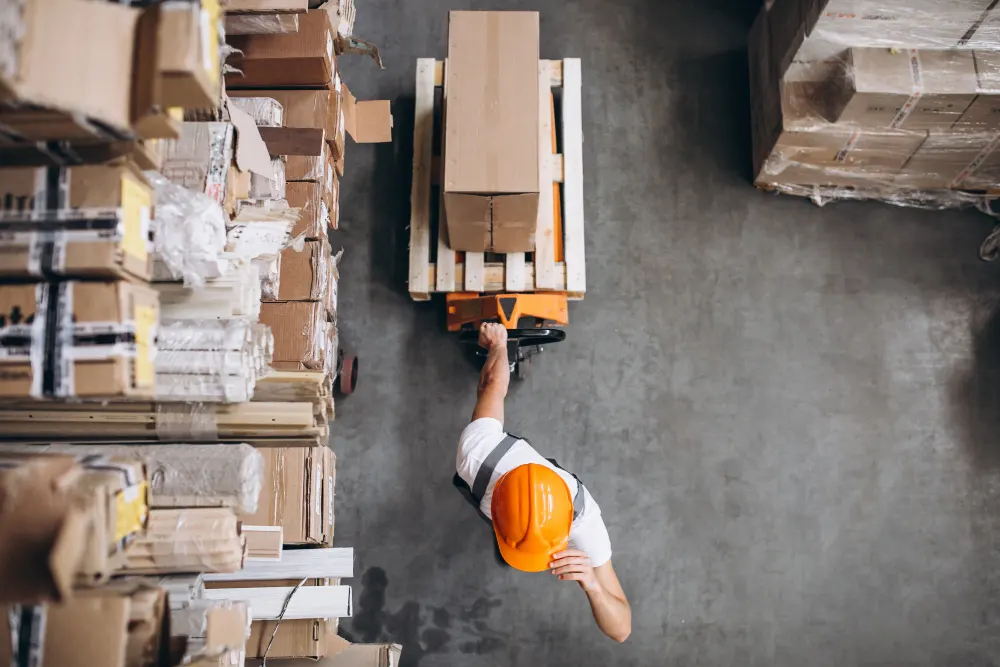
The starting point is determining the size, weight, sensitivity, and direction of movement of the load. The transport route is then selected, aisle clearances are checked, appropriate equipment is assigned, and personnel are informed about safe working practices. When manual carrying is to be performed, the load is kept close to the body, direction changes are made with the feet rather than by twisting, and strenuous one-off lifts are avoided. When equipment-assisted transport is used, the forklift route, load center, floor condition, and line of sight are all taken into account. OSHA and HSE guidelines set training, maintenance, clear passage areas, and risk assessment as the main framework. A solid process therefore provides a sense of control as much as speed.
What Are Material Handling Equipment?
Material handling equipment varies according to the weight of the work and the speed of the flow. The most common tools include pallet jacks, forklifts, reach trucks, stacker machines, hand trucks, platform carriers, conveyors, cranes, lifting slings, racking systems, and pallets. In smaller warehouses, manual hand trucks and pallet jacks are frequently used. As loads increase in size, forklifts and stacking equipment become more central. Conveyor systems bring order to repetitive flows. Cranes and slings come to the fore for heavy lift operations. Official safety sources emphasize that the maintenance condition of equipment is just as important as its correct use. Even the best equipment can create risk if training is lacking. Aisle clearances, doorway passages, turning radius, and floor condition also directly influence equipment selection. Achieving efficient results in handling requires more than simply acquiring powerful machinery. The load type, frequency of operations, and site layout must all be considered together. Any equipment that reduces manual effort can be valuable, but an unsuitable choice can slow down workflow. The most straightforward path for businesses is to build a simple but correct equipment set suited to their load profile.
Why Is Workplace Safety Important in Material Handling?
Workplace safety in the handling process is just as important as the speed of the operation. No matter how correctly cargo is transported, if employee health is not protected, the process cannot be sustained. Even a small mistake in a warehouse, terminal, or loading area can lead to serious injuries, product loss, and disruptions to workflow. Incorrectly lifting heavy boxes, pallets left in aisles, stacks that block visibility, or equipment whose maintenance has been delayed can all seem ordinary in the course of daily work — yet the real risk most often emerges precisely at these seemingly ordinary points. In a safe handling environment, workers know what to carry and how, and proceed with the correct method rather than in haste. The load is kept close to the body, sudden twisting movements are avoided, and the transport route is checked in advance. In areas where forklifts are used, pedestrian movement is clearly separated. Racking layout, floor cleanliness, and equipment maintenance are also important components of safety. When workplace safety is strong, employees feel more at ease, error rates fall, product damage decreases, and operations proceed in a more organized manner.