

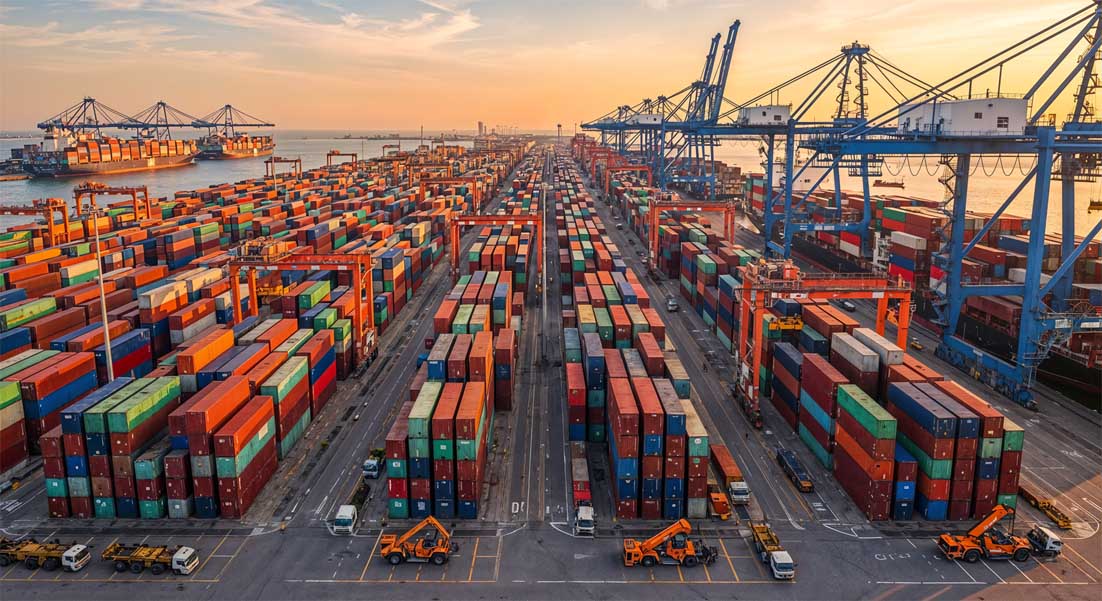
The 7 Rights of Logistics is a fundamental approach that describes delivering the right product in the right quantity, in the right condition, to the right place, at the right time, to the right customer, and at the right cost. This framework looks not only at the transportation side of operations but also at warehousing, inventory, ordering, planning, delivery, and cost balance together. When logistics management is well established, the business both meets customer expectations more clearly and reduces losses such as unnecessary waiting, faulty shipments, and excess stock.
What Are the 7 Rights of Logistics?
The 7 Rights of Logistics is a practical control framework that businesses use to measure delivery quality. For a shipment to be considered successful, it is not enough for the product alone to be correct. The quantity, time, location, customer, cost, and condition information must also proceed correctly. A missing or faulty step can lower the quality of the entire operation.
- Right product
- Right quantity
- Right condition
- Right place
- Right time
- Right customer
- Right cost
When logistics processes are evaluated through these seven headings, errors become more visible. Wrong product shipments, incomplete deliveries, delayed vehicles, incorrect addresses, or high transportation costs can be quickly identified.
Right Product and Right Quantity Control
The right product means preparing the product requested in the order completely and with the correct code. If there are similar products, different variations, and similar packaging in the warehouse, the risk of error increases. A barcode system, product code verification, and a final matching step before shipment reduce this risk.
The right quantity is the exact match between the ordered amount and the shipped product. Sending excess product increases costs, while sending insufficient product damages customer satisfaction. Within logistics process management, inventory tracking, counting procedures, and order preparation control must be handled together. Reducing quantity errors also lowers return and re-shipment costs.
Right Time and Right Place Planning
Time planning is one of the most sensitive points of logistics operations. When the vehicle loading time, warehouse departure, delivery appointment, and route duration are not calculated correctly, delays become inevitable. The shipment schedule must be made by taking actual traffic conditions and warehouse preparation time into account.
In right place planning, the delivery address, warehouse location, transfer point, and customer reception area must be clear. Address errors experienced along the supply chain unnecessarily slow down operations. On the logistics management side, address verification, route planning, and delivery zone analysis must be carried out regularly. Delivery to the right point is as decisive on the cost side as it is on time.
Right Condition and Product Safety
The right condition refers to protecting the product from damage during transportation and storage. Fragile products, food products, chemical products, textile products, and electronic goods do not have the same transportation requirements. Packaging, temperature, humidity, stacking height, and vehicle type must be selected according to the product group.
Damage prevention within logistics processes is not limited to packaging alone. Training of the loading team, forklift use, shelf arrangement, in-vehicle securing, and inspection during delivery are also part of the same chain. Damaged deliveries weaken brand trust as well as causing product loss. When the right condition is provided, the customer receives the product at the expected quality.
Right Customer and Right Cost Balance
The right customer means delivering the order to the right recipient, with the right documents, and the right delivery information. Companies with similar titles, multi-branch structures, or different delivery points can create confusion. There must be consistency between the order screen, waybill, invoice, and delivery address.
The right cost does not describe the cheapest transportation option but the most efficient solution for the operation. A transportation model that seems very cheap can become more expensive due to delay and damage risks. During cost analysis within logistics process management, fuel, vehicle occupancy rate, warehouse labor, return rate, waiting time, and route efficiency must be evaluated together. The 7 Rights of Logistics aims to establish a healthy balance between quality and budget on the cost side.
Data and Warehouse Organization in Process Optimization
Process optimization covers the arrangements made to ensure that operations proceed faster, are more traceable, and have fewer errors. If warehouse layout, product picking route, shelf coding, inventory counting, packing area, and shipment gate flow are not efficient, time loss increases. Even a small change in warehouse layout can significantly reduce daily preparation time.
Data-based tracking is of great importance for logistics management. Order preparation time, vehicle occupancy rate, delivery performance, return reasons, and damage rates must be monitored regularly. As visibility within the supply chain increases, bottlenecks are noticed earlier. When logistics processes are monitored with digital tracking tools, decisions are based on measurable data rather than guesswork.
Improvement Steps for Logistics Process Management
Logistics process management should be conducted with a continuous improvement mindset rather than as a one-time arrangement. First, the current flow should be mapped, then delays, waiting periods, unnecessary transportation, excess inventory, and delivery errors should be identified. A separate action plan should be prepared for each issue.
When vehicle planning, warehouse organization, inventory accuracy, supplier communication, and customer notification steps are addressed together, operations become more robust. The 7 Rights of Logistics can be thought of as a practical compass for process optimization. Each "right" controls a different operational point of the business. The right product, right quantity, and right condition preserve quality. The right time, right place, and right customer increase delivery success. The right cost ensures that the entire structure remains sustainable.