

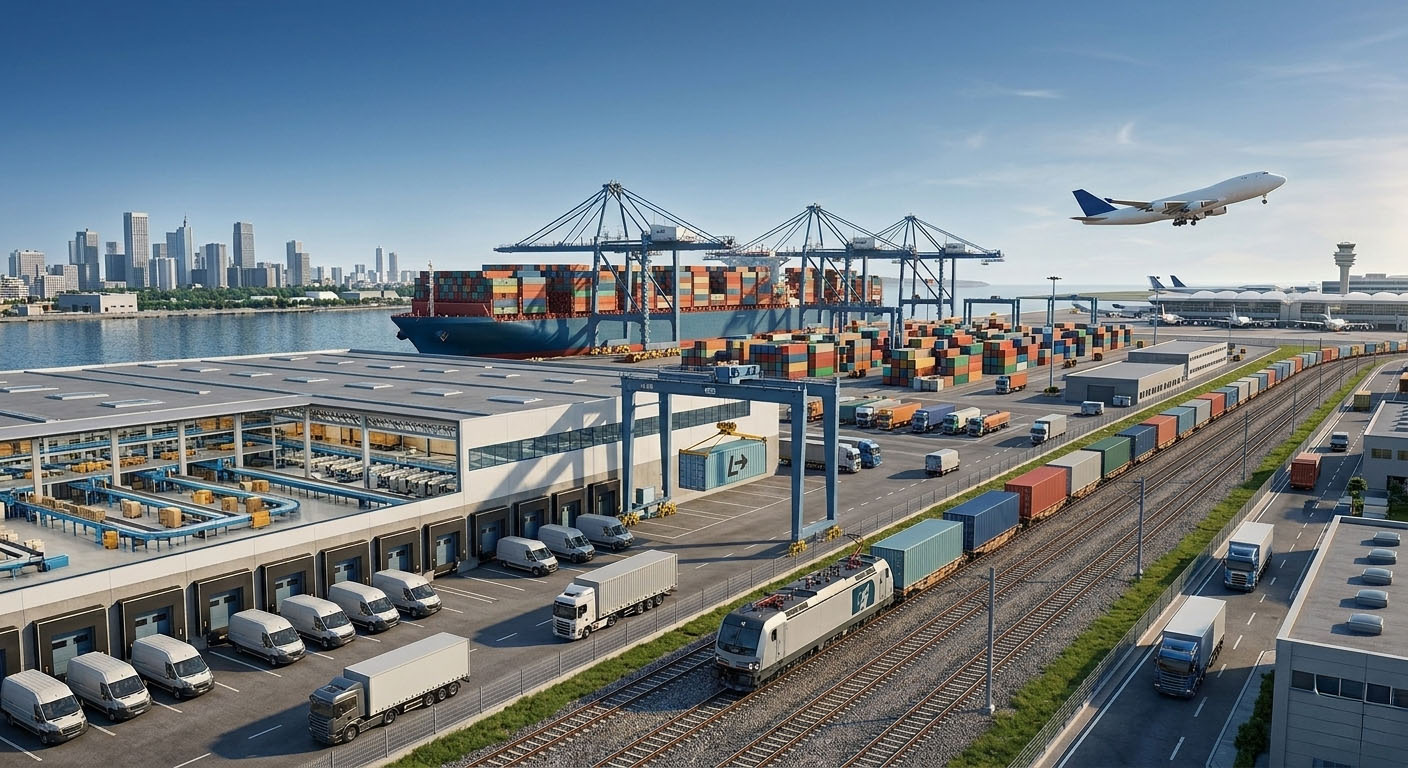
Logistics is the planned execution of the transport, warehousing, tracking, customs, distribution, and delivery steps a product goes through from the point of production until it reaches the buyer. A product being available on the shelf, in the warehouse, at the factory, or at the customer's address on time is most often made possible by the orderly operation in the background. Logistics companies manage exactly this flow. The job is not only loading goods onto a vehicle and taking the product to another address. Which product will be carried by which vehicle, in which warehouse it will wait, with which documents it will leave, when the delivery will take place, and how to act if a risk arises in the process are all planned from the outset. Today, traceability matters as much as delivery speed for businesses. The customer wants to know where their order is, the manufacturer wants to see the stock flow, and the importer wants to track the customs and transport schedule clearly. At this point, receiving professional service eases the workload and makes the operation more orderly.
Transport Planning and Operations Management
The transport process begins according to the characteristics of the product. The plan differs for loads that are fragile, heavy, require a cold chain, are high-volume, or need fast delivery. Vehicle choice, route, delivery time, loading area, and destination are evaluated together. Among road, sea, air transport, or combined transport options, the model suited to the nature of the work is chosen. Logistics companies track details such as potential delays, missing documents, address errors, vehicle suitability, and delivery timing during transport. A company that works to a plan focuses not only on getting the load on the road but on delivering it safely. Companies that serve across different transport modes, like Tetalog Logistics, can handle route and operations tracking more holistically for international shipments. This structure makes the process more readable for businesses that export and import. A good transport plan is also valuable for cost control. Empty mileage, the wrong vehicle choice, delayed delivery, and unplanned waiting can bring extra burden to a company. When the operation is set up correctly from the start, the product moves with less risk.
Warehousing, Stock Tracking, and Order Preparation
The product to be shipped does not always go directly to the buyer. Some products wait in the warehouse for a certain period, are prepared as orders come in, and are dispatched to different addresses. Warehousing is one of the most important steps in a modern supply chain. Products need to be held in the right area, under the right conditions, and without confusion. Stock tracking reduces product loss and incorrect shipments. The code, quantity, shelf address, and exit date of a product entering the warehouse are recorded. When an order comes in, the product is quickly located, packed, and made ready for shipment. In fields such as e-commerce, retail, food, textiles, and spare parts, warehouse order directly affects customer satisfaction. On the warehousing side, packing, labeling, barcoding, product sorting, and return management may also take place. A business receiving logistics services can find more flexible ways of working without expanding its own warehouse. For companies that experience seasonal peaks, using an outsourced warehouse is a practical option that reduces fixed costs.
Customs, Documentation, and International Processes
In shipments abroad, document order is as important as transport itself. When the invoice, packing list, bill of lading, origin details, delivery terms, and customs documents are not prepared completely, the product can wait at the border. As the waiting period lengthens, costs rise and the delivery plan is disrupted on the customer side. In international trade, the customs process can vary according to a country's rules and the type of product. Not every load is processed with the same document. Chemical products, food, textiles, machinery, or electronics may go through different controls. Logistics companies ensure the transport proceeds within the legal framework by tracking this document flow. For a business that exports, correct planning makes it easier for the product to reach the destination country on time. In importing, the movement of the load between the port, bonded warehouse, warehouse, and factory must be planned clearly. When document control, delivery terms, and customs tracking are weak, a small error can slow down the entire process. That is why experience, network structure, and communication quality make a serious difference in international shipments.
Distribution, Delivery, and Choosing the Right Company
The distribution stage is the point at which the customer experiences the service most visibly. When the product arrives on time and intact, the process is considered well managed. A product that arrives late, damaged, or misrouted to the wrong address, however, damages brand trust. For this reason, the delivery plan should not be seen merely as the final step. The result of the entire operation emerges here. When choosing logistics, a company's service area, vehicle capacity, warehouse infrastructure, tracking system, communication speed, and problem-solving approach should be evaluated. Transparent information sharing is as important as sector experience. The customer wants to know where their load is, when it will be delivered, and whom to contact if a disruption occurs.
When choosing among logistics companies, deciding on price alone may not be correct. A very low quote can mean incomplete service or weak tracking. The business's need should first become clear. Will the product be distributed within the city or sent abroad, is warehousing required, is there customs tracking, will regular shipments be made? The answers to these questions determine the right service model. Professional process management saves companies time and creates a more reliable delivery experience for the customer. When product movement is well planned, stock is managed more easily, order flow speeds up, and the operations team is kept away from unnecessary complexity. For businesses that want to build a strong supply chain in foreign trade, e-commerce, manufacturing, and retail, choosing the right business partner carries long-term value.