

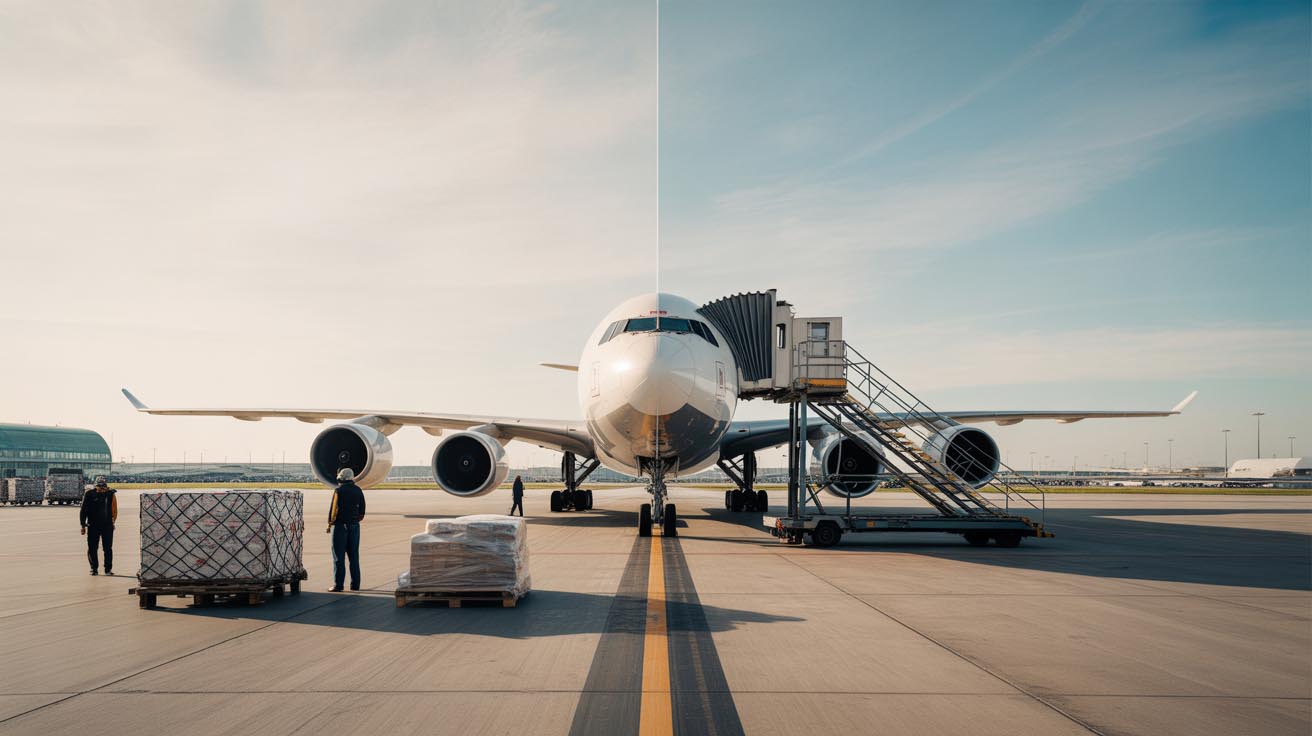
Air transportation stands out for its speed and security, while having clear limits in terms of cost and capacity. Used for the right shipment it delivers a serious competitive advantage; used for the wrong one it simply creates unnecessary cost. In this article we examine the advantages and disadvantages of air transportation one by one and look at when it should be chosen, with a comparison across transport modes. For the definition, workflow and scope of the service, you can visit our air transportation page.
What Are the Advantages of Air Transportation?
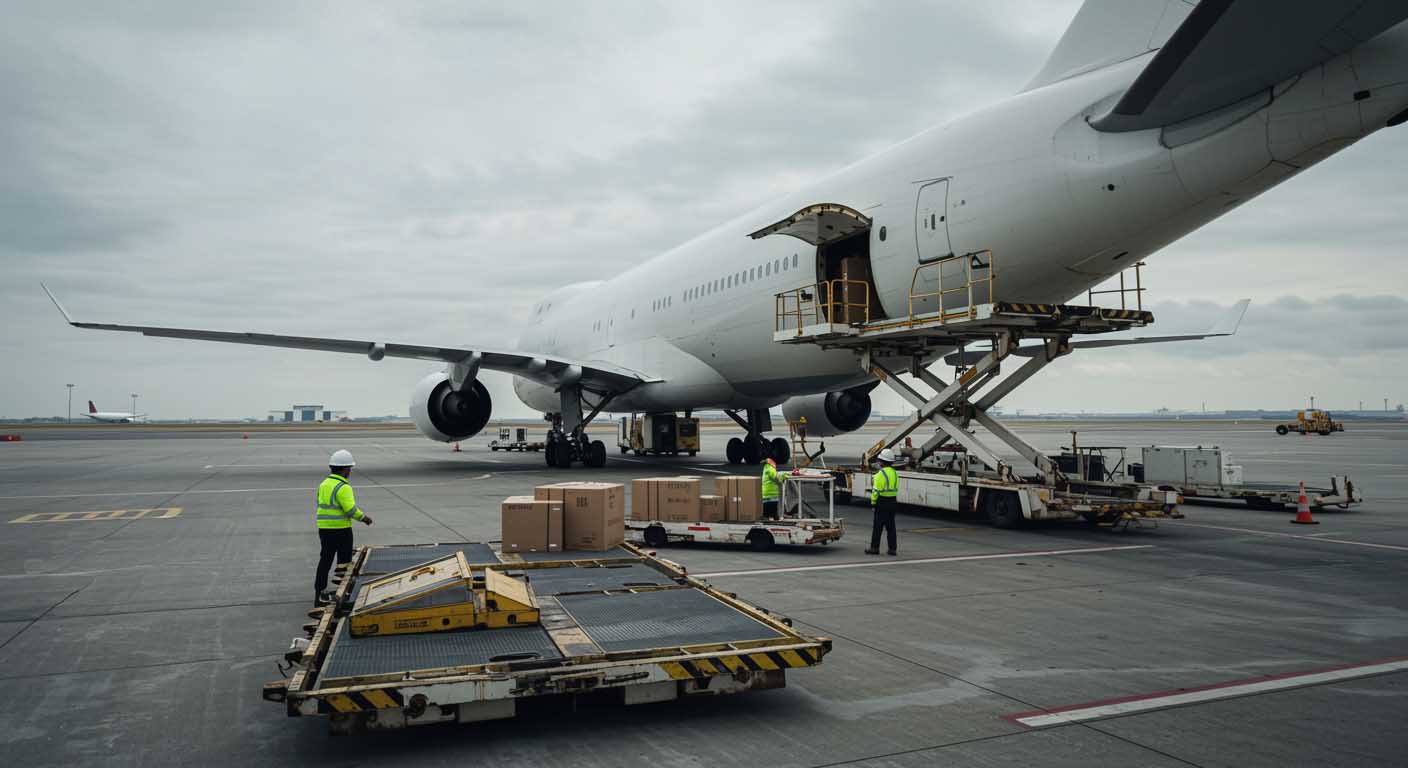
Speed and Short Transit Times
Speed is the most evident strength of air transport. An intercontinental shipment can be completed within days, while the same route may take weeks by sea. That difference translates directly into commercial gain for a spare part halting a production line or a collection at risk of missing its season. The high frequency of flights also brings flexibility to planning.
High Security and Low Risk of Damage
Airports operate under strict security control and the number of handling steps is lower than in other modes. Fewer transfers significantly reduce the risk of damage and loss. For this reason air transport is a safe choice for high-value goods, electronic devices and sensitive equipment.
Lower Stock and Warehousing Costs
Short transit times allow businesses to operate with less safety stock. As the volume of goods sitting in the warehouse falls, so do storage, insurance and tied-up capital costs. Although air freight rates are high, the outcome is often balanced once the total supply chain cost is taken into account.
Suitability for Sensitive and Perishable Goods
Products with a short shelf life such as pharmaceuticals, vaccines, blood products, fresh food and flowers can be damaged by temperature and humidity during long journeys. Air transport ensures these goods reach their destination in the shortest possible time. For temperature-controlled shipments, cold chain transportation solutions are used.
Advanced Tracking and a Transparent Process
In air cargo, a shipment can be monitored at every stage through its air waybill (AWB) number. Acceptance, loading, transit and delivery steps are recorded in the system, which makes it easier to keep the consignee informed and to respond quickly to any disruption.
Wide Reach
Air transport makes it possible to reach regions without ports or with difficult access by sea. It is also less affected by border crossing problems on land routes. Today the service is not limited to airport-to-airport movements; it can be offered together with door-to-door delivery, warehousing, customs clearance and packaging.
What Are the Disadvantages of Air Transportation?
High Cost
Cost is the most evident disadvantage of air transport. Fuel expenses, airport and terminal charges and security surcharges push freight rates above those of other modes. In addition, since charges are based on volumetric weight, light but space-consuming shipments can end up costing more than expected. For the calculation logic, see our articles on what freight means and how it is calculated and desi calculation.
Limited Capacity and Size Restrictions
The volume and weight capacity of aircraft cargo holds is limited. Heavy industrial products, bulk cargo and out-of-gauge equipment are often unsuitable for air transport. For such shipments, sea transportation or project transportation is the more appropriate solution.
Dependence on Weather and Global Events
Flight schedules are quickly affected by adverse weather, airspace closures and global events. A delayed or cancelled flight can cause knock-on delays in time-sensitive shipments. Securing capacity also becomes harder during peak seasons, so early booking is recommended for critical consignments.
Restricted and Prohibited Goods
The range of goods that cannot be carried by air, or that require special permission, is wider than in other modes. Explosives, certain classes of flammable and corrosive substances, some lithium battery types and pressurized containers are subject to restrictions. Such shipments require packaging, labelling and declaration in line with IATA rules; for details, see our dangerous goods transportation page.
Air, Sea and Road Transport Compared
| Criterion | Air | Sea | Road |
|---|---|---|---|
| Transit time | Shortest (1-5 days) | Longest (20-45 days) | Medium (3-15 days) |
| Unit cost | Highest | Lowest | Medium |
| Capacity | Limited | Very high | Medium |
| Risk of damage | Low | Medium | Medium |
| Weather sensitivity | High | Medium | Medium |
| Suitable cargo | Light, valuable, urgent | Heavy, bulky, bulk | Mid-sized, regional |
Where a single mode is not sufficient, modes can be combined. For example, multimodal transportation solutions built as road from a remote production site to the airport and then air to the destination country strike a balance between speed and cost.
When Should Air Transportation Be Chosen?
Air transport comes into its own whenever transit time matters more than cost. Spare part shipments that halt production, products with a short shelf life, high-value and low-volume cargo, textile collections that must reach the season and urgent medical supplies all fall into this scope. Sample shipments and e-commerce consignments are also areas where air transport is frequently used.
Conversely, air transport is not economical for heavy and bulky cargo, for planned shipments with flexible delivery dates or for products with a low unit value. A practical method when deciding is to compare the unit value of the goods with the freight cost: if the freight represents a small percentage of the value of the goods, air transport makes sense. To choose between service levels, you can consider our economic, premium and charter transportation options.
For the full list of cargo types that can be carried by air and the operational details, see our air cargo transportation guide.
Frequently Asked Questions
What Is the Biggest Advantage of Air Transportation?
Speed. Completing intercontinental shipments within days allows delivery commitments to be met and businesses to operate with less stock. The low risk of damage, thanks to the small number of handling steps, is the second major advantage after speed.
Why Is Air Transportation Expensive?
Fuel expenses, airport and terminal charges, security surcharges and limited cargo capacity all raise the cost. In addition, since the charge is based on whichever is greater — actual or volumetric weight — light but bulky shipments can produce high figures.
Which Goods Cannot Be Carried by Air?
Explosives, certain classes of flammable and corrosive substances, some lithium battery types and pressurized containers fall under restrictions. Some cannot be carried at all, while others may be carried with special packaging, labelling and declaration. The dangerous goods class and UN number of the product should be clarified before shipment.
Which Is Better: Air or Sea Transport?
It depends on the priority of the shipment. If transit time is critical and the cargo is light, valuable or perishable, air transport is advantageous. If the cargo is heavy and bulky and the delivery date is flexible, sea transport gives a far more economical result. Multimodal solutions combining both modes can also balance speed against cost.